
How to pray?
Fajr
Zuhr
Asr
Maghrib
esha
Witr (Voluntary Prayer)
Fajr Salah consists of two Fardh (compulsory) Rak’ahs.
Step 1:
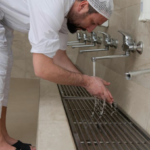
Make sure you have performed Wudu (ablution), wear clothing which covers your awrah (intimate parts) and make a sincere intention (Niyyah) to perform the two Fardh Rak’ahs of Fajr prayer.
Step 2
Stand facing the Qibla with your feet shoulder-width apart.
Step 3: Takbeer e Tahrima
Raise your hands and say “Allahu Akbar” to begin the prayer. Then place your right hand over your left.
Step 4
It is Sunnah to recite Sana at this point: “Subhanaka Allahumma wa bihamdika wa tabarakasmuka, wa ta’ala jadduka wa la ilaha ghairuk”.
Step 5
Recite Ta’awadh (A’udhu billahi min ash-shaytaan-ir-rajeem)
Recite Tasmiah (Bismillah hir rahman nir raheem).
Step 6
Recite Surah Al-Fatihah.
Step 7
After reciting Surah Al-Fatihah, recite another Surah or ideally at least three verses from the Quran.
Step 8: Ruku’
Bow while saying “Allahu Akbar”, and place your hands on your knees. Say “Subhana Rabbiy-al-‘Adheem” three times.
Step 9
Rise from the bowing position and stand upright, while saying “Sami’ Allahu liman hamidah” then say “Rabbana lakal hamd” once standing.
Step 10: Sujood
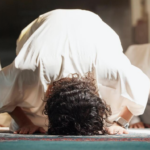
Prostrate by saying “Allahu Akbar” and place your forehead, nose, palms, knees, and toes on the ground. Say “Subhaana Rabbiy-al-A‘laa” three times and then sit back briefly. While seated on your thighs, say “Rabbigh firli“. After a few seconds, return back into prostration while saying “Allahu Akbar” and repeat “Subhaana Rabbiy-al-A‘laa” three times while prostrating.
Step 11
Rise from the prostration and stand up whilst saying “Allahu Akbar”.
Step 12
To complete your second Rak’ah, repeat steps 5-10 once more, and sit back into the position mentioned in step 10, saying “Allahu Akbar” as you rise.
Step 13
Recite Tashahhud (At-tahiyyatu lillah, was-salawaatu wat-tayyibaat. As-salaamu ’alayka ayyuhan-Nabiyyu wa rahmat-Ullahi wa barakaatu. As-salaamu ’alayna, wa ’alaa ‘ibaadi-llahis saaliheen. Ashhadu alla ilaha illallah wa ashhadu anna muhammadan ‘abduhu wa rasuluhu).
Step 14
Send Salawat upon the Prophet Muhammad (PBUH) by reciting: “Allahumma Salli ‘ala Muhammadin wa ‘ala aali Muhammadin, kama sallaita ‘ala Ibrahima wa ‘ala aali Ibrahima innaka Hamidum-Majeed. Allahumma barik ‘ala Muhammadin wa ‘ala aali Muhammadin kama barakta ‘ala Ibrahima wa ‘ala aali Ibrahima innaka Hameedum-Majeed”.
Step 15
Conclude the prayer by turning your head to the right and then to the left, saying “Assalamu alaikum wa rahmatullah” each time.
You have now completed your Fajr prayer, Alhamdulillah!
Dhuhr Salah consists of four Fardh Rak’ahs.
Step 1
Make sure you have performed Whudu (ablution), wear clothing which covers your awrah (intimate parts) and make a sincere intention (Niyyah) to perform the four Fardh Rak’ahs for Dhuhr prayer.
Step 2
Stand facing the Qibla with your feet shoulder-width apart.
Step 3
Raise your hands and say “Allahu Akbar” to begin the prayer. Then place your right hand over your left.
Step 4
It is Sunnah to recite Sana at this point: “Subhanaka Allahumma wa bihamdika wa tabarakasmuka, wa ta’ala jadduka wa la ilaha ghairuk.”
Step 5
Recite Ta’awadh (A’udhu billahi min ash-shaytaan-ir-rajeem) and Tasmiah (Bismillah hir rahman nir raheem).
Step 6
Recite Surah Al-Fatihah
Step 7
After reciting Surah Al-Fatihah, recite another Surah or at least three verses from the Quran.
Step 8
Bow (Ruk’ah) while saying “Allahu Akbar” and place your hands on your knees. Say “Subhana Rabbiy-al-‘Adheem” ideally at least three times.
Step 9
Rise from the bowing position and stand upright, while saying “Sami’ Allahu liman hamidah” then say “Rabbana lakal hamd” once standing.
Step 10
Prostrate (Sujood) by saying “Allahu Akbar” and place your forehead, nose, palms, knees, and toes on the ground. Say “Subhaana Rabbiy-al-A‘laa” ideally at least three times and then sit back briefly saying “Allahu Akbar” as you rise. After a few seconds, return back into prostration and repeat “Subhaana Rabbiy-al-A‘laa” ideally three times once more.
Step 11
Rise from the prostration and stand up whilst saying “Allahu Akbar”.
Step 12
To complete your second Rak’ah, repeat steps 5-10 once more, and sit back into the position mentioned in step 10, saying “Allahu Akbar” as you rise.
Step 13
Recite Tashahhud (At-tahiyyatu lillah, was-salawaatu wat-tayyibaat. As-salaamu ’alayka ayyuhan-Nabiyyu wa rahmat-Ullahi wa barakaatu. As-salaamu ’alayna, wa ’alaa ‘ibaadi-llahis saaliheen. Ashhadu alla ilaha illallah wa ashhadu anna muhammadan ‘abduhu wa rasuluhu).
Step 14
Return to a standing position while saying “Allahu Akbar”, and then recite Ta’awadh, Tasmiah and Surah al-Fatihah. You do not need to accompany this with a recitation of another Surah for Fardh prayers.
Step 15
Repeat steps 8-11 to complete your third Rak’ah.
Step 16
Repeat steps 14-15 once more to complete your fourth Rak’ah.
Step 17
Once you have completed your four Rak’ahs, sit back into the position mentioned in step 10, then recite Tashahhud again.
Step 18
Send Salawat upon the Prophet Muhammad (peace be upon him) by reciting: “Allahumma Salli ‘ala Muhammadin wa ‘ala aali Muhammadin, kama sallaita ‘ala Ibrahima wa ‘ala aali Ibrahima innaka Hamidum-Majeed. Allahumma barik ‘ala Muhammadin wa ‘ala aali Muhammadin kama barakta ‘ala Ibrahima wa ‘ala aali Ibrahima innaka Hameedum-Majeed”.
Step 19
It is highly recommended to recite some Sunnah du’as (supplications) at this point.
Step 20
Conclude the prayer by turning your head to the right and then to the left, saying “Assalamu alaikum wa rahmatullah” each time.
You have now completed the Fardh Rak’ahs of your Dhuhr prayer, Alhamdulillah!
Asr is the afternoon prayer and consists of four Fardh Rak’ahs.
Step 1
Make sure you have performed Whudu (ablution), wear clothing which covers your awrah (intimate parts) and make a sincere intention (Niyyah) to perform the four Fardh Rak’ahs for Asr prayer.
Step 2
Stand facing the Qibla with your feet shoulder-width apart.
Step 3
Raise your hands and say “Allahu Akbar” to begin the prayer. Then place your right hand over your left.
Step 4
It is Sunnah to recite Sana at this point: “Subhanaka Allahumma wa bihamdika wa tabarakasmuka, wa ta’ala jadduka wa la ilaha ghairuk.”
Step 5
Recite Ta’awadh (A’udhu billahi min ash-shaytaan-ir-rajeem) and Tasmiah (Bismillah hir rahman nir raheem).
Step 6
Recite Surah Al-Fatihah.
Step 7
After reciting Surah Al-Fatihah, recite another Surah or ideally at least three verses from the Quran.
Step 8
Bow (Ruk’ah) while saying “Allahu Akbar” and place your hands on your knees. Say “Subhana Rabbiy-al-‘Adheem” ideally at least three times.
Step 9
Rise from the bowing position and stand upright, while saying “Sami’ Allahu liman hamidah” then say “Rabbana lakal hamd” once standing.
Step 10
Prostrate (Sujood) by saying “Allahu Akbar” and place your forehead, nose, palms, knees, and toes on the ground. Say “Subhaana Rabbiy-al-A‘laa” ideally at least three times and then sit back briefly saying “Allahu Akbar” as you rise. After a few seconds, return back into prostration and repeat “Subhaana Rabbiy-al-A‘laa” three times once more.
Step 11
Rise from the prostration and stand up whilst saying “Allahu Akbar”.
Step 12
To complete your 2nd Rak’ah, repeat steps 5-10 once more, and sit back into the position mentioned in step 10, saying “Allahu Akbar” as you rise.
Step 13
Recite Tashahhud (At-tahiyyatu lillah, was-salawaatu wat-tayyibaat. As-salaamu ’alayka ayyuhan-Nabiyyu wa rahmat-Ullahi wa barakaatu. As-salaamu ’alayna, wa ’alaa ‘ibaadi-llahis saaliheen. Ashhadu alla ilaha illallah wa ashhadu anna muhammadan ‘abduhu wa rasuluhu).
Step 14
Return to a standing position while saying “Allahu Akbar”, and then recite Ta’awadh, Tasmiah and Surah al-Fatihah. You do not need to accompany this with a recitation of another Surah for Fardh prayers.
Step 15
Repeat steps 8-11 to complete your third Rak’ah.
Step 16
Repeat steps 14-15 once more to complete your fourth Rak’ah.
Step 17
Once you have completed your four Rak’ahs, sit back into the position mentioned in step 10, then recite Tashahhud again.
Step 18
Send Salawat upon the Prophet Muhammad (peace be upon him) by reciting: “Allahumma Salli ‘ala Muhammadin wa ‘ala aali Muhammadin, kama sallaita ‘ala Ibrahima wa ‘ala aali Ibrahima innaka Hamidum-Majeed. Allahumma barik ‘ala Muhammadin wa ‘ala aali Muhammadin kama barakta ‘ala Ibrahima wa ‘ala aali Ibrahima innaka Hameedum-Majeed”.
Step 19
It is highly recommended to recite some Sunnah du’as (supplications) at this point.
Step 20
Conclude the prayer by turning your head to the right and then to the left, saying “Assalamu alaikum wa rahmatullah” each time.
You have now completed your Asr prayer, Alhamdulillah!
Maghrib Salah consists of three Fardh (compulsory) Rak’ahs.
Step 1
Make sure you have performed Whudu (ablution), wear clothing which covers your awrah (intimate parts) and make a sincere intention (Niyyah) to perform the three Fardh Rak’ahs for Maghrib prayer.
Step 2
Stand facing the Qibla with your feet shoulder-width apart.
Step 3
Raise your hands and say “Allahu Akbar” to begin the prayer. Then place your right hand over your left.
Step 4
It is Sunnah to recite Sana at this point: “Subhanaka Allahumma wa bihamdika wa tabarakasmuka, wa ta’ala jadduka wa la ilaha ghairuk.”
Step 5
Recite Ta’awadh (A’udhu billahi min ash-shaytaan-ir-rajeem) and Tasmiah (Bismillah hir rahman nir raheem).
Step 6
Recite Surah Al-Fatihah.
Step 7
After reciting Surah Al-Fatihah, recite another Surah or ideally at least three verses from the Quran.
Step 8
Bow (Ruk’ah) while saying “Allahu Akbar” and place your hands on your knees. Say “Subhana Rabbiy-al-‘Adheem” ideally at least three times.
Step 9
Rise from the bowing position and stand upright, while saying “Sami’ Allahu liman hamidah” then say “Rabbana lakal hamd” once standing.
Step 10
Prostrate (Sujood) by saying “Allahu Akbar” and place your forehead, nose, palms, knees, and toes on the ground. Say “Subhaana Rabbiy-al-A‘laa” ideally at least three times and then sit back briefly saying “Allahu Akbar” as you rise. After a few seconds, return back into prostration and repeat “Subhaana Rabbiy-al-A‘laa” ideally three times once more.
Step 11
Rise from the prostration and stand up whilst saying “Allahu Akbar”.
Step 12
To complete your second Rak’ah, repeat steps 5-10 once more, and sit back into the position mentioned in step 10, saying “Allahu Akbar” as you rise.
Step 13
Recite Tashahhud (At-tahiyyatu lillah, was-salawaatu wat-tayyibaat. As-salaamu ’alayka ayyuhan-Nabiyyu wa rahmat-Ullahi wa barakaatu. As-salaamu ’alayna, wa ’alaa ‘ibaadi-llahis saaliheen. Ashhadu alla ilaha illallah wa ashhadu anna muhammadan ‘abduhu wa rasuluhu).
Step 14
Return to a standing position while saying “Allahu Akbar”, and then recite Ta’awadh, Tasmiah and Surah al-Fatihah. You do not need to accompany this with a recitation of another Surah for Fardh prayers.
Step 15
Repeat steps 8-11.
Step 16
Once you have completed your three Rak’ahs, sit back into the position mentioned in step 10, then recite Tashahhud again.
Step 17
Send Salawat upon the Prophet Muhammad (peace be upon him) by reciting: “Allahumma Salli ‘ala Muhammadin wa ‘ala aali Muhammadin, kama sallaita ‘ala Ibrahima wa ‘ala aali Ibrahima innaka Hamidum-Majeed. Allahumma barik ‘ala Muhammadin wa ‘ala aali Muhammadin kama barakta ‘ala Ibrahima wa ‘ala aali Ibrahima innaka Hameedum-Majeed”.
Step 18
It is highly recommended to recite some Sunnah du’as (supplications) at this point.
Step 19
Conclude the prayer by turning your head to the right and then to the left, saying “Assalamu alaikum wa rahmatullah” each time.
You have now completed your Maghrib prayer, Alhamdulillah!
Dhuhr Salah consists of four Fardh Rak’ahs.
Step 1
Make sure you have performed Whudu (ablution), wear clothing which covers your awrah (intimate parts) and make a sincere intention (Niyyah) to perform the four Fardh Rak’ahs for Dhuhr prayer.
Step 2
Stand facing the Qibla with your feet shoulder-width apart.
Step 3
Raise your hands and say “Allahu Akbar” to begin the prayer. Then place your right hand over your left.
Step 4
It is Sunnah to recite Sana at this point: “Subhanaka Allahumma wa bihamdika wa tabarakasmuka, wa ta’ala jadduka wa la ilaha ghairuk.”
Step 5
Recite Ta’awadh (A’udhu billahi min ash-shaytaan-ir-rajeem) and Tasmiah (Bismillah hir rahman nir raheem).
Step 6
Recite Surah Al-Fatihah
Step 7
After reciting Surah Al-Fatihah, recite another Surah or at least three verses from the Quran.
Step 8
Bow (Ruk’ah) while saying “Allahu Akbar” and place your hands on your knees. Say “Subhana Rabbiy-al-‘Adheem” ideally at least three times.
Step 9
Rise from the bowing position and stand upright, while saying “Sami’ Allahu liman hamidah” then say “Rabbana lakal hamd” once standing.
Step 10
Prostrate (Sujood) by saying “Allahu Akbar” and place your forehead, nose, palms, knees, and toes on the ground. Say “Subhaana Rabbiy-al-A‘laa” ideally at least three times and then sit back briefly saying “Allahu Akbar” as you rise. After a few seconds, return back into prostration and repeat “Subhaana Rabbiy-al-A‘laa” ideally three times once more.
Step 11
Rise from the prostration and stand up whilst saying “Allahu Akbar”.
Step 12
To complete your second Rak’ah, repeat steps 5-10 once more, and sit back into the position mentioned in step 10, saying “Allahu Akbar” as you rise.
Step 13
Recite Tashahhud (At-tahiyyatu lillah, was-salawaatu wat-tayyibaat. As-salaamu ’alayka ayyuhan-Nabiyyu wa rahmat-Ullahi wa barakaatu. As-salaamu ’alayna, wa ’alaa ‘ibaadi-llahis saaliheen. Ashhadu alla ilaha illallah wa ashhadu anna muhammadan ‘abduhu wa rasuluhu).
Step 14
Return to a standing position while saying “Allahu Akbar”, and then recite Ta’awadh, Tasmiah and Surah al-Fatihah. You do not need to accompany this with a recitation of another Surah for Fardh prayers.
Step 15
Repeat steps 8-11 to complete your third Rak’ah.
Step 16
Repeat steps 14-15 once more to complete your fourth Rak’ah.
Step 17
Once you have completed your four Rak’ahs, sit back into the position mentioned in step 10, then recite Tashahhud again.
Step 18
Send Salawat upon the Prophet Muhammad (peace be upon him) by reciting: “Allahumma Salli ‘ala Muhammadin wa ‘ala aali Muhammadin, kama sallaita ‘ala Ibrahima wa ‘ala aali Ibrahima innaka Hamidum-Majeed. Allahumma barik ‘ala Muhammadin wa ‘ala aali Muhammadin kama barakta ‘ala Ibrahima wa ‘ala aali Ibrahima innaka Hameedum-Majeed”.
Step 19
It is highly recommended to recite some Sunnah du’as (supplications) at this point.
Step 20
Conclude the prayer by turning your head to the right and then to the left, saying “Assalamu alaikum wa rahmatullah” each time.
You have now completed the Fardh Rak’ahs of your Esha prayer, Alhamdulillah!
Witr prayer is a voluntary night prayer in Islam, performed after the Isha prayer. It holds significant importance and is highly recommended for Muslims to offer.
The Prophet (peace be upon him) said:
Witr is a duty, and whoever wants to pray Witr with seven (rak’ahs), let him do so; whoever wants to pray Witr with five, let him do so, whoever wants to pray Witr with three, let him do so; and whoever wants to pray Witr with one, let him do so.
[Hadith | Sunan an-Nasa’i]
Step 1
Make sure you have performed Whudu (ablution), wear clothing which covers your awrah (intimate parts) and make a sincere intention (Niyyah) to perform the Witr prayer.
Step 2
The Witr prayer consists of an odd number of Rak’ahs (units). The most common practice is to perform 3 Rak’ahs. You may choose to perform 1, 3, 5, or any odd number of Rak’ahs for Witr (in the Hanafi madhab, the minimum is 3 Rak’ahs).
Step 3
Stand facing the Qibla with your feet shoulder-width apart.
Step 3
Raise your hands and say “Allahu Akbar” to begin the prayer. Then place your right hand over your left.
Step 4
It is Sunnah to recite Sana at this point: Subhanaka Allahumma wa bihamdika wa tabarakasmuka, wa ta’ala jadduka wa la ilaha ghairuk.
Step 5
Recite Ta’awadh (A’udhu billahi min ash-shaytaan-ir-rajeem) and Tasmiah (Bismillah hir rahman nir raheem).
Step 6
In the first Rak’ah, recite Surah Al-Fatihah (the opening chapter of the Quran), followed by another Surah or a few verses from the Quran.
Step 7
Bow (Ruk’ah) while saying “Allahu Akbar” and place your hands on your knees. Say “Subhana Rabbiy-al-‘Adheem” ideally at least three times.
Step 8
Rise from the bowing position and stand upright, while saying “Sami’ Allahu liman hamidah” then say “Rabbana lakal hamd” once standing.
Step 9
Prostrate (Sujood) by saying “Allahu Akbar” and place your forehead, nose, palms, knees, and toes on the ground. Say “Subhaana Rabbiy-al-A‘laa” ideally ideally at least three times and then sit back briefly saying “Allahu Akbar” as you rise. After a few seconds, return back into prostration and repeat “Subhaana Rabbiy-al-A‘laa” ideally three times once more.
Step 10
Rise from the prostration and stand up whilst saying “Allahu Akbar”.
Step 11
Begin the second Rak’ah by reciting Surah Al-Fatihah, followed by another Surah or verses from the Quran.
Step 12
Repeat steps 7-10 (performing Ruk’ah and Sujood) and then sit and recite Tashahhud (At-tahiyyatu lillah, was-salawaatu wat-tayyibaat. As-salaamu ’alayka ayyuhan-Nabiyyu wa rahmat-Ullahi wa barakaatu. As-salaamu ’alayna, wa ’alaa ‘ibaadi-llahis saaliheen. Ashhadu alla ilaha illallah wa ashhadu anna muhammadan ‘abduhu wa rasuluhu).
Step 13
Rise to stand for the third Rak’ah. In the third Rak’ah, you can recite Surah Al-Fatihah and a shorter Surah or verses from the Quran, or you may recite a portion of any Surah. This is the last Rak’ah of the Witr prayer.
Step 14
After completing the recitation, raise your hands and say “Allahu Akbar”. Instead of going down for Ruku raise your hands to your ear lobes or shoulders and bring them back down into position.
Step 15
It is Sunnah to then recite the Witr Du’a known as Du’a-e-Qunoot:
اَللَّهُمَّ اِنَّا نَسۡتَعِيۡنُكَ وَنَسۡتَغْفِرُكَ وَنُؤۡمِنُ بِكَ وَنَتَوَكَّلُ عَلَيۡكَ وَنُثۡنِىۡ عَلَيۡكَ ٱلۡخَيۡرَ وَنَشۡكُرُكَ وَلَا نَكۡفُرُكَ وَنَخۡلَعُ وَنَتۡرُكُ مَنۡ يَّفۡجُرُكَ. اَللَّهُمَّ اِيَّاكَ نَعۡبُدُ وَلَكَ نُصَلِّئ وَنَسۡجُدُ وَاِلَيۡكَ نَسۡعٰى ونَحۡفِدُ ونَرۡجُوۡا رَحۡمَتَكَ وَنَخۡشٰى عَذَابَكَ اِنَّ عَذَابَكَ بِالۡكُفَّارِ مُلۡحِقٌٌ
Transliteration: Allah humma inna nasta-eenoka wa nastaghfiruka wa nu’minu bika wa natawakkalu alaika wa nusni alaikal khair, wa nashkuruka wala nakfuruka wa nakhla-oo wa natruku mai yafjuruka, Allah humma iyyaka na’budu wa laka nusalli wa nasjud wa ilaika nas aaa wa nahfizu wa narju rahma taka wa nakhshaa azaabaka inna azaabaka bil kuffari mulhik.
Translation: O Allah! We implore You for help and beg forgiveness of You and believe in You and rely on You and extol You and we are thankful to You and are not ungrateful to You and we alienate and forsake those who disobey You. O Allah! You alone do we worship and for You do we pray and prostrate and we betake to please You and present ourselves for the service in Your cause and we hope for Your mercy and fear Your chastisement. Undoubtedly, Your torment is going to overtake infidels O Allah!
Step 16
After finishing this du’a, continue with salah in the regular, repeating steps 7-10 to perform Ruk’ah and Sujood and then sit back and recite the Tashahhud again.
Step 17
Send Salawat upon the Prophet Muhammad (PBUH) by reciting: “Allahumma Salli ‘ala Muhammadin wa ‘ala aali Muhammadin, kama sallaita ‘ala Ibrahima wa ‘ala aali Ibrahima innaka Hamidum-Majeed. Allahumma barik ‘ala Muhammadin wa ‘ala aali Muhammadin kama barakta ‘ala Ibrahima wa ‘ala aali Ibrahima innaka Hameedum-Majeed”.
Step 18
It is highly recommended to recite some Sunnah du’as (supplications) at this point.
Step 19
Conclude the prayer by turning your head to the right and then to the left, saying “Assalamu alaikum wa rahmatullah” each time.
Note: The above is the most common way of performing Witr in the Hanafi madhab. Please note that there are other ways of performing the Witr prayer that are also authentic.
The Witr prayer is generally offered individually, and it is recommended to pray it at the end of the night, before the Fajr prayer. However, it is permissible to perform it at any time after the Isha prayer until the break of dawn.
Remember, the Witr prayer is an excellent opportunity to seek forgiveness, make personal supplications, and strengthen your connection with Allah in the serene hours of the night.